Kishori Kaul
The Divine Glow on Canvas
A Pioneer of
Indian Modernism
Kishori Kaul was the first woman from the Kashmir Valley to seek formal training at the prestigious Faculty of Fine Arts in Baroda. A favoured pupil of masters N.S. Bendre and K.G. Subramanyan, she became a central figure of the "Baroda Group," moving away from traditional revivalism toward a modern, multicultural aesthetic.
Her works are now held in permanent national collections, including the National Gallery of Modern Art (NGMA) — a testament to a career that transformed the language of Kashmiri art on the national stage.
The Art of Suggestion
"Veil as much as reveal."
Kaul's signature style is a masterful negotiation between the visible and the felt — a philosophy she called the art of suggestion. She believed an artist should veil as much as reveal, allowing the viewer's imagination to complete the work.
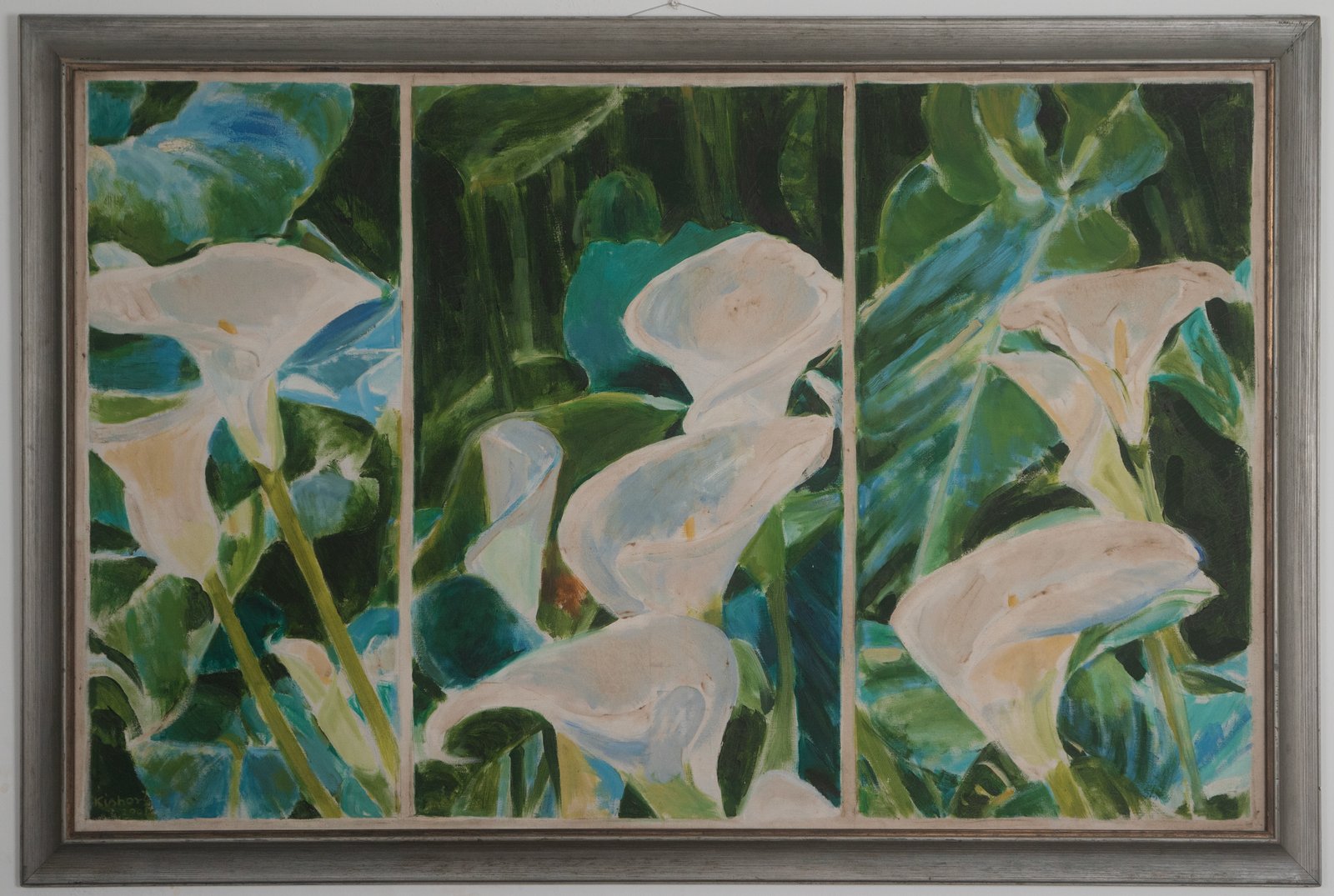
She famously applied oil paint with the transparency and delicacy of watercolors, allowing light to permeate the canvas rather than sit upon it. This rare technique transformed her landscapes into emotional representations of her homeland — not literal topographical records, but deeply felt impressions of a place held in the heart.
The Language of Her Canvas
The Unseen Light
Deeply influenced by the mystic verses (vakhs) of the 14th-century Kashmiri poet-saint Lal Ded, her work is a profound meditation on internal light and spiritual searching. The divine glow she pursued was not of the sun, but of the soul.
The Ritual of Colour
To Kaul, colour was not a tool but a religious experience. The vibrant yellow of mustard fields and the vermilion of Shakti worship were creative acts linked directly to the nature of the Valley — each hue a prayer in pigment.
The Lyrical Bloom
After a minimalist "white-on-white" period following personal grief, Kaul returned to what she called her Lyrical Bloom — a vibrant, verdant palette that served as a testament to the redemptive power of nature and the indestructibility of beauty.
A Mental Camera
Turned to Kashmir
As you contemplate these works within Shangraff's rooms, you are witnessing a "mental camera" at work — Kaul's reconstruction of the gold spangled waters of the Jhelum and the rhythmic verticality of the Zabarwan mountains. Her canvases serve as a repository of a Kashmir that exists beyond the reach of conflict, smiling with vital lyricism.
"Gold spangled waters and the rhythm of the mountains — this is the Kashmir she kept."Return to Shangraff