In the Shadow of
the Zabarwan
A Journey of Spirit & Stone
The Lungs of Srinagar
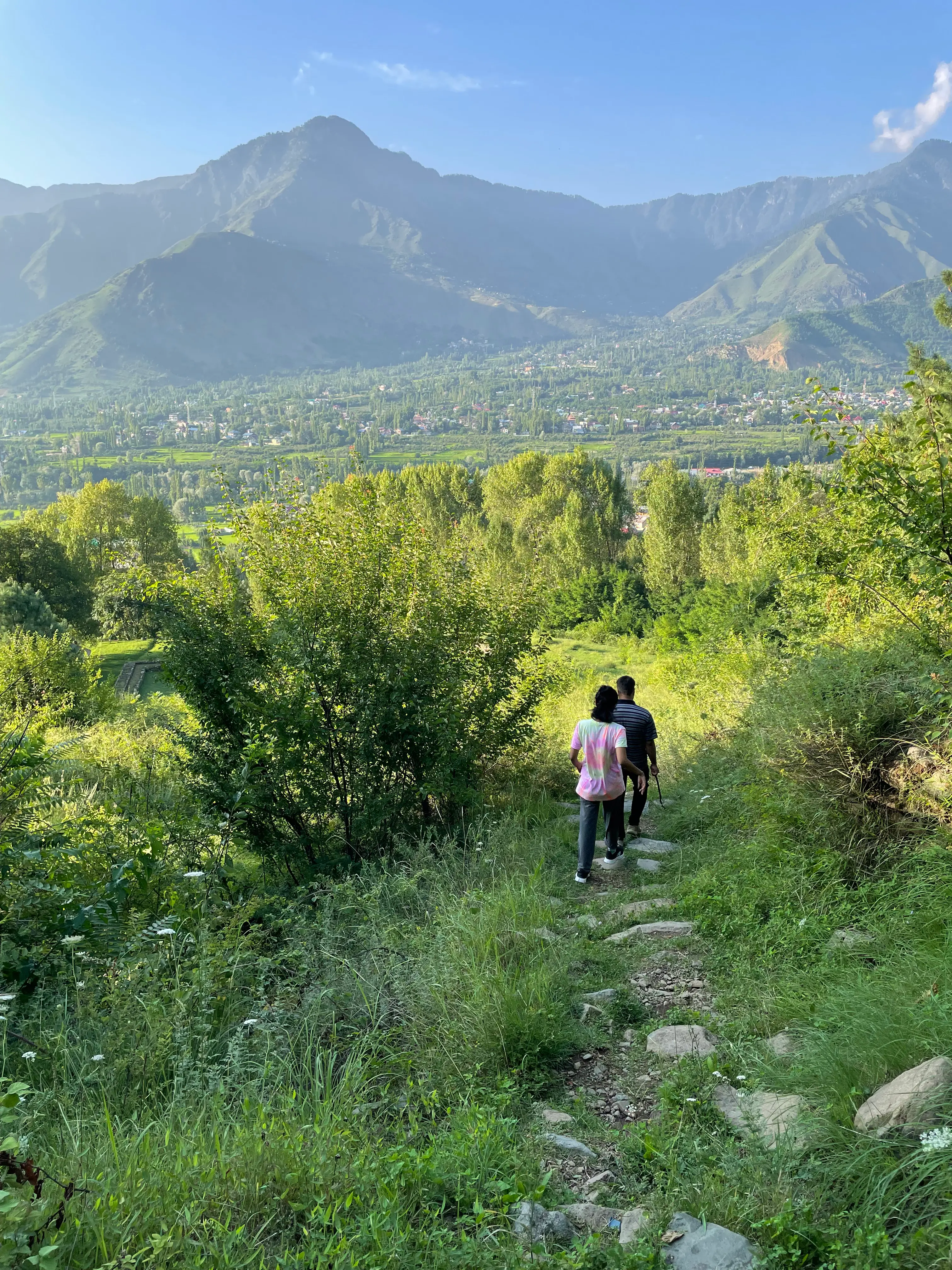
Shangraff rests in the lap of the Zabarwan Range, a unique sub-mountain chain approximately 32 kilometers long that bridges the gap between the majestic Pir Panjal and the Great Himalayas. These foothills are not just mountains; they are the lungs of Srinagar.
As you walk these trails, you are surrounded by a rich tapestry of flora including majestic Chinar trees that turn fire-red in autumn, ancient walnuts, and the delicate blossoms of apple and cherry orchards. High above, in the adjacent Dachigam National Park, roams the Hangul (Kashmir Stag) , the only surviving species of Red Deer in the subcontinent and the Himalayan Black Bear.
Gopi Tirath & Ishbar
You are staying in Ishbar, a hamlet synonymous with spiritual awakening. Just a short walk away lies Gopi Tirath and the Gupt Ganga (Hidden Ganges). This area is deeply revered in Kashmir Shaivism, a non-dualistic philosophy that flourished here between the 9th and 12th centuries.
The region was the home of the great sage Swami Lakshman Joo, who kept these ancient teachings alive. The spring at Gupt Ganga is believed to hold waters as sacred as the Ganges itself, offering spiritual cleansing to those who drink from it.
Harwan Ruins
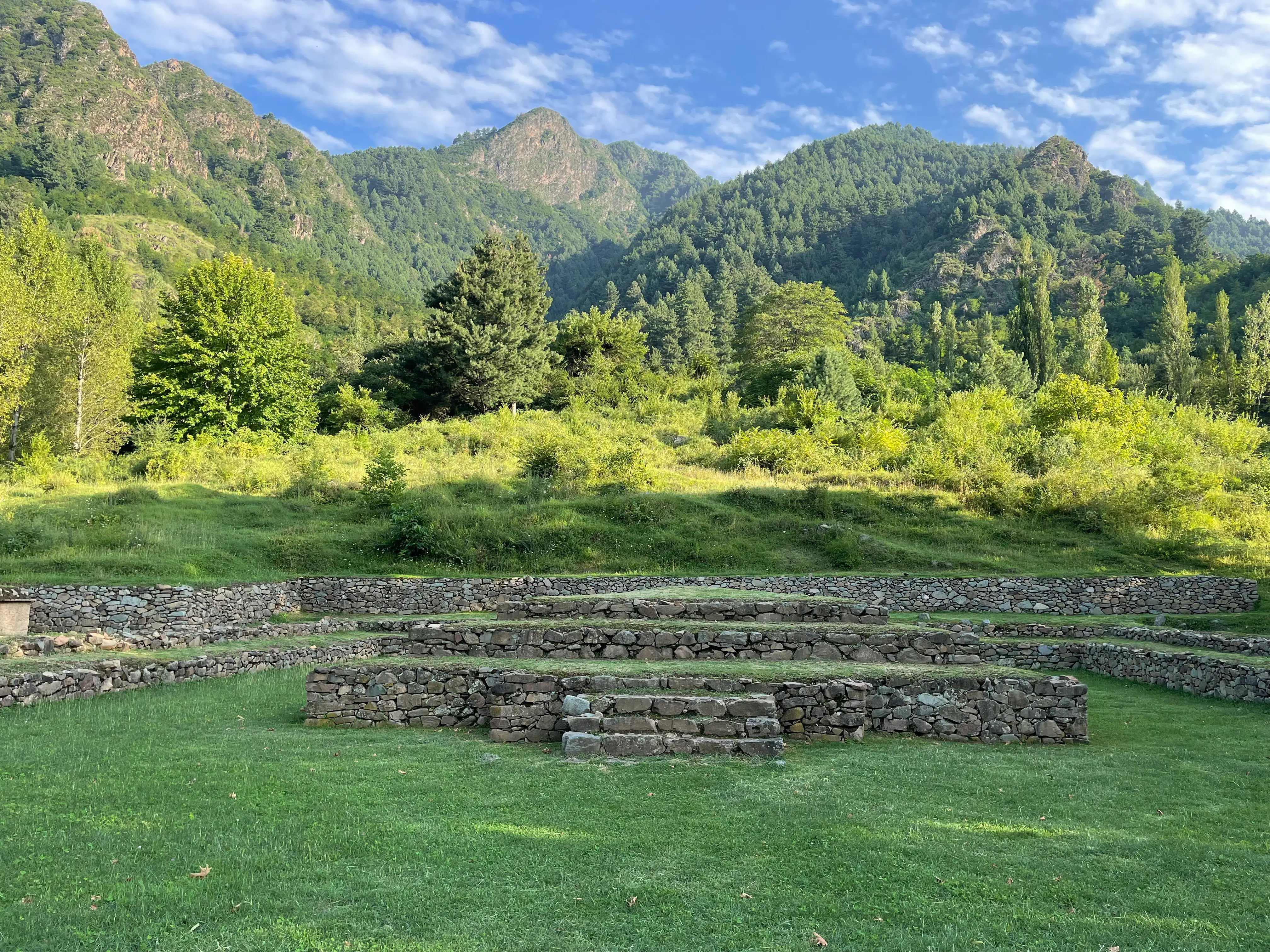
A short distance away lies the cradle of Buddhist history. The Harwan Buddhist Ruins date back to the Kushan era (1st–5th century AD). It is widely believed that the critical 4th Buddhist Council was held here under Emperor Kanishka.
Unlike other sites, Harwan is famous for its unique terracotta tile pavements, stamped with motifs of ascetics, dancers, and Central Asian features, revealing a time when Kashmir was the intellectual bridge between India and the Silk Road.